
'India and Indian Americans cannot rely on wishful thinking about the checks and balances in the US system to magically take care of the many dangerous things that Trump could do,' says Chicago-based writer Ram Kelkar.

'If policy-makers hold the lives of animals to be more significant than the welfare of a human populace, I can't believe that they're likely to do anything progressive for India.'

India's Kailash Satyarthi received the Nobel Peace Prize for 2014 on Wednesday, sharing it with Pakistan's Malala Yousafzai, the youngest ever Nobel laureate, for their work on promoting child rights in the troubled sub-continent, where millions are deprived of their childhood and education.

'The US wants Modi to succeed because we want India to succeed. For our part, when India thinks of its partners in the world, we want it to think of the US first. That means positioning our country as the preferred provider of the key inputs that can help to propel India's rise.' 'The meeting between Modi and Obama is, and must be, an opportunity for true strategic dialogue -- not a scripted exchange of talking points, but an open discussion of the big questions. What kind of world do we want to live in? What are our true priorities? And most importantly, why does this partnership still matter?'

'We are going to see relatively soon an executive order that deals with H-1B and other temporary visas.' 'We are also going to see an executive order on undocumented people.' 'Undocumented Indians comprise the largest population growth of all undocumented people in this country.' 'Just because India is not named in this executive order doesn't mean it won't be in the future.'

'While the government must be relentless in its efforts to curb unruly elements to ensure secular harmony and protect its goal of national development,it must not lose the moral high ground by giving in to the antics of the anti-nationalist lobby.' 'They must be countered and relegated to the dustbin of history,' says Vivek Gumaste.

'Whether it's investments in Kashmir, building naval facilities, or selling top-of-the-range military equipment, Pakistan could well benefit more under Xi's watch.' 'Do Chinese concerns about the 'Islamisation' of Pakistan give it pause about how quickly to move forward with security and economic projects? At the moment the indication is quite the opposite: China is doubling down on its support to Pakistan, partly because of its fears about where the country is headed.'
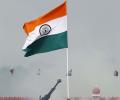
'Three security challenges could emerge shortly. The possibility (almost bordering on certainty) is as certain as the fact that night follows day: A terrorist attack by a Pakistan-based group. Chinese intrusion on the border.Communal tension/riots.' Colonel Anil A Athale (retd) explains what the Modi Sarkar needs to be prepared for.
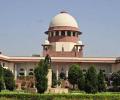
The verdict could impact a range of life choices of Indians, including food habits and sexual orientation.

'How can Kashmir be demilitarised if the terrorist threat remains and Pakistan continues to incite elements in Kashmir to keep the internal situation unstable?' asks former foreign secretary Kanwal Sibal.

'The parallels between 1914 and 2014 are striking. The crumbling of American and Russian hegemony, the rise of powerful terrorist groups, ferment in the Middle East and the rise of China... These closely mirror the world of 1914,' says Colonel Anil A Athale (retd).

'The present government's greatest weakness is its intolerance. Tolerance is the key tenet of democracy. How can any government stop someone from speaking one's mind?'

'China's excessive military aid to Pakistan is the real elephant in the room as far as Sino-Indian relations are concerned. India should be confident enough to accept a degree of closeness between China and Pakistan, since China may wish to use this link for its foray into the Muslim world.' 'But the Chinese must be realistic enough to know that as time passes, the tactic of using Pakistan as a proxy to check India will yield diminishing returns. The US tried it for 60 years but failed, so will China,' says Colonel Anil A Athale (retd).

While Iraq and Afghanistan top the Global Terrorism Index 2014 as the most terror-affected nations, India has been ranked number six.
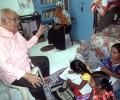
'I've seen the craze for English education even among the poorest. But that is only for their sons. Parents feel thrilled when they see their sons going to school wearing a tie. They don't mind paying for their sons' private tuitions too.' 'But daughters are sent to municipal schools, madarsas, small schools where teachers with no teaching skills are paid Rs 2,000 or Rs 4,000. That's why more girls come to my class.' Syed Feroze Ashraf, who has sent 500-odd girls (and a few boys) -- all first generation learners, children of grave-diggers, hawkers, rickshaw-drivers, tailors and watchmen -- to college, speaks to Jyoti Punwani. A Rediff.com Special.

'If you destroy the assets in Pathankot, you degrade the combat potential of India; you degrade the war potential of India.'

'The real danger in India right now is that identity politics is being stoked in extremely dangerous ways.' 'The narrative you get about churches in the mainstream Indian media and the narrative you get in the social media is very different.' 'Many Americans today want to appropriate Indian culture. They want yoga, but they say yoga has nothing to do with Hinduism. They want Ayurveda, but they say it's got nothing to do with Hinduism.' 'Hinduism has been failed by political constituencies in India -- seculars and the right-wing.'
 © 2026 Rediff.com - Advertise with us - Disclaimer - Privacy Policy - Sitemap - Feedback - About us - Terms of use - Grievances